The most immersive world
is reality, unlocked
A true Westworld needs all three. For 30 years, the technology fell short. LLMs change that.
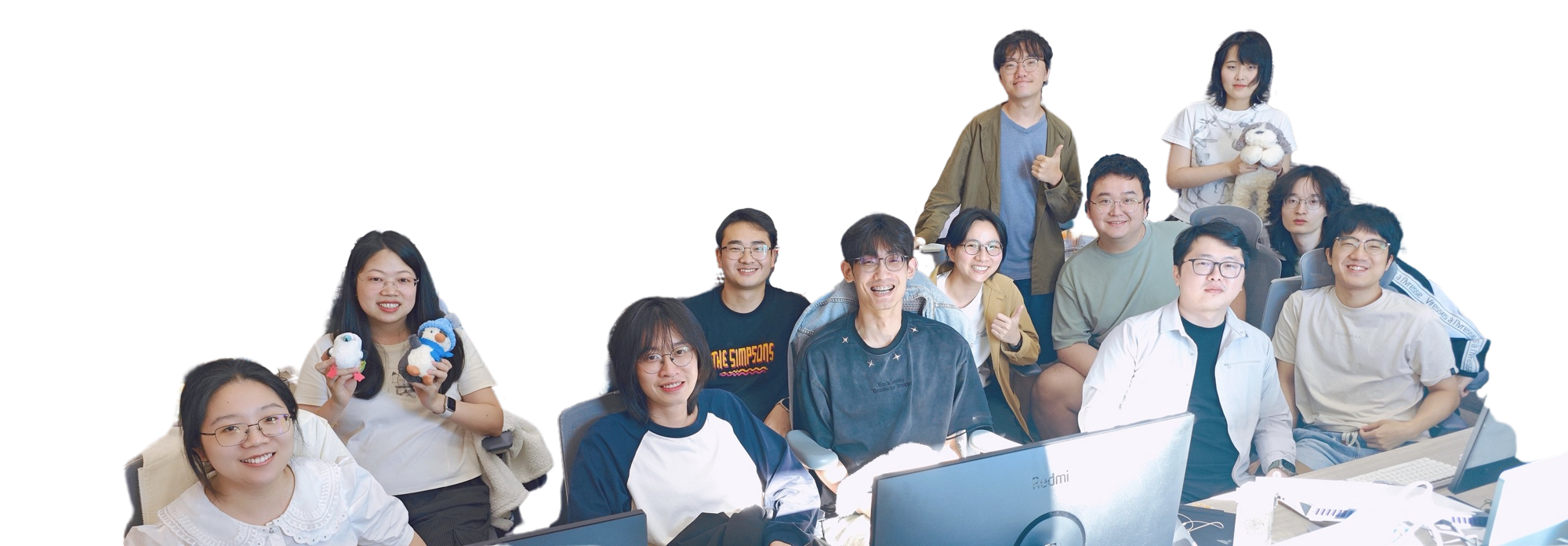
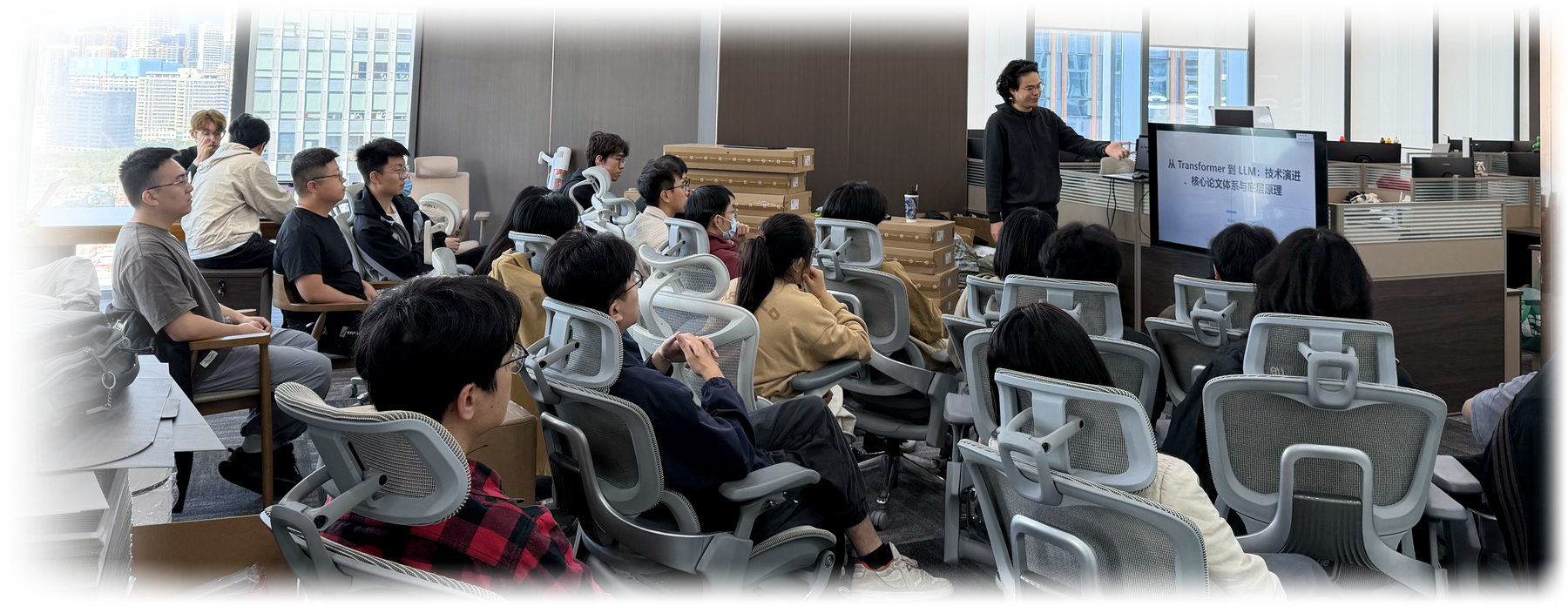
One of China's strongest AI × Entertainment teams (to our knowledge)

2024 – Present HKUST · PhD candidate, Mathematics
2022 – 2024 HKUST · MPhil, Mathematics
2017 – 2022 HKUST · BSc, Mathematics & Computer Science

2021 – 2025 Perfect World · Game Designer
· Jade Dynasty 2: Systems & Monetization Design
· Dan Mo Shui Yun Xiang: Lead Designer / Project Lead
2017 – 2021 Peking University · BA, Economics

2023 – Present HKUST · PhD candidate, Mathematics
2019 – 2023 USTC · BSc, Mathematics

2018 – 2023 Tencent · Product Manager
2014 – 2018 Rutgers · BS, Business Analytics & Information Technology
Most game worlds still give everyone the same experience
Industrial-scale production · Procedural generation · Player-driven content — Each broke one barrier. LLMs can break all three.
He still says, “Hero, please help me!”
Nobody in town marries or grows old.
The next day, the NPC says, “Morning, stranger.”
The same opening. The same tutorial dialogue.
V0 validates demand: 50K players, 2 months, zero paid acquisition
V1 IN DEVELOPMENT — AGENTIC WORLD × MULTIPLAYER SOCIAL × PRODUCTION QUALITY
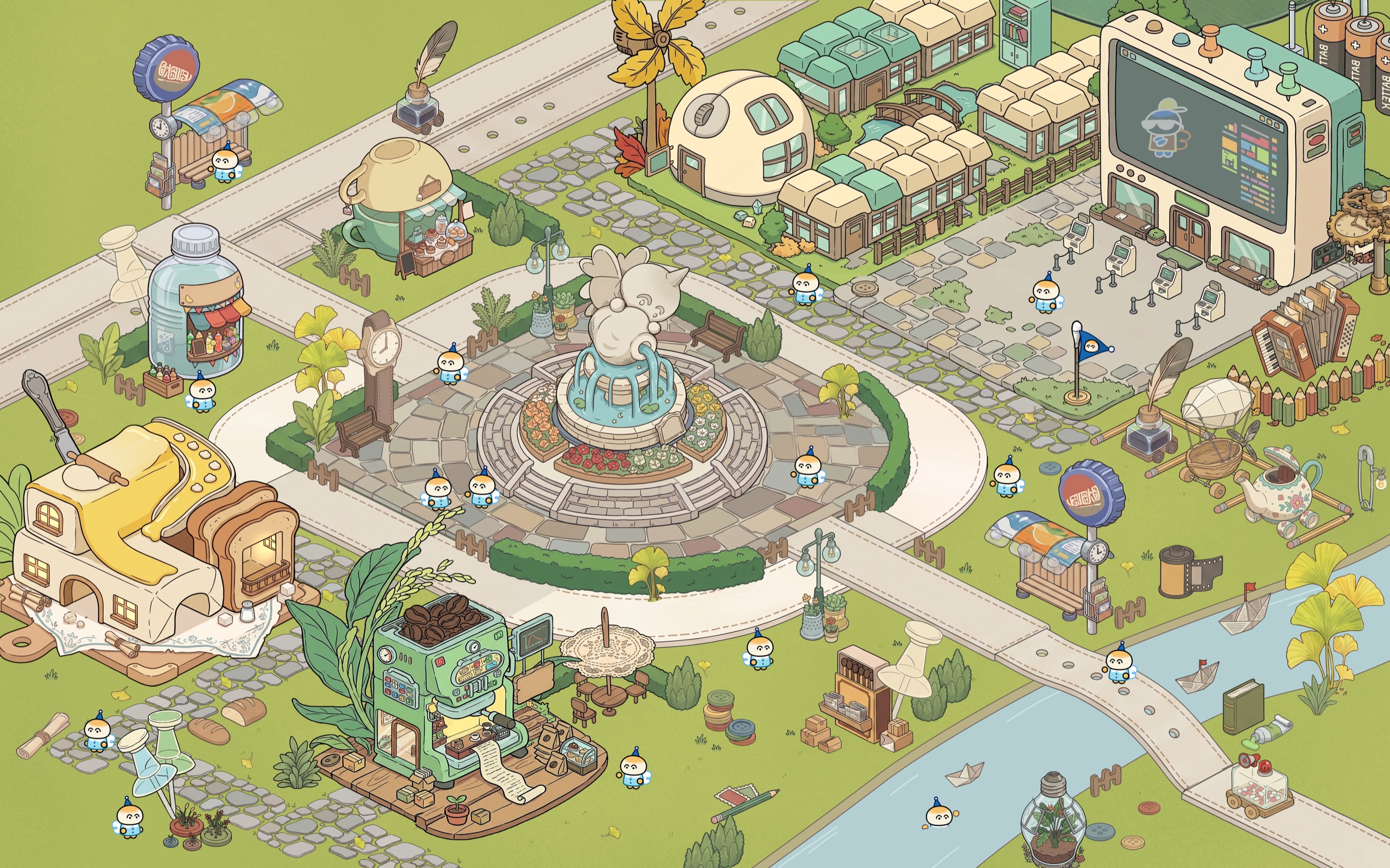

* Images show the latest V1 art and interfaces. Both videos are AI-assisted previews based on actual V1 art direction.
AI Town: Xingyuan — My wishes. Their freedom.
Enter through PC, desktop companions, web, mini apps, mobile or hardware. Nurture, guide and observe AI residents whose personal goals, social ties and city events weave into an ever-changing social life simulation.
A digital life and world that feel alive
THE PLAYER PITCH
Behind your mirror is a tiny world. Its residents live, make friends and grow on their own. Check in and lend a hand: you shape their next chapter.
TARGET PLAYERS
Initial audience: Cozy, nurturing and life-sim players; office workers with spare moments; AI early adopters.
Expansion: Casual idle, social and IP/worldbuilding audiences.
GENRE
An AI-native social life sim: residents live autonomously while players nurture and guide them. Cities, relationships and major events keep evolving.
SETTING / IP HOOK
A civilization inside a mirror builds myths, festivals and social structures from everyday objects: teapot volcanoes, chocolate fields and more.
See what changed
Discover new relationships, goal progress, city events and unexpected branches.
Build their environment
Grow, harvest, sell and decorate to provide resources, tools and surroundings for their goals.
Make choices and advise
Choose or suggest actions. Shape goals, risk limits, tools and life direction.
Follow feeds and relationships
Resident feeds, social posts, AI-to-AI interaction and city news create a stream of stories.
Lightweight desktop updates
Small status updates, choices and optional alerts let the world progress without demanding full attention.
LONG-TERM GOALS
Shape a unique life and influence on the world: reach milestones, build relationships, unlock city roles, and leave shared memories and lasting traces.
RETENTION
Early: Content-led growth unlocks new experiences as residents develop, building anticipation for their future.
Midgame: Content gives way to social and emotional engagement. Residents join city life; AI interaction generates stories and bonds with players.
Late: Emotional attachment, ties with other players and ongoing gameplay updates sustain engagement.
MONETIZATION
Cosmetics: Resident appearances and home furnishings.
Passes / subscriptions: Agent count and capabilities.
Social spending: Social currency, gifts and premium social features.
Three curves cross the threshold together
Lifelike agents · Token economics · Multimodal quality
AGENT CAPABILITY — THE LIFELIKE THRESHOLD
Context, harnesses, skills and multi-agent engineering give characters and worlds a lifelike presence:
→ Players can immerse themselves (NPCs stay in character)
→ Agents stay consistent over time (no drift or breakdown)
→ Worlds keep evolving (relationships, cultures and stories emerge)
TOKEN COST — COMMERCIAL VIABILITY
Over the past two years: 100× lower; over the next two years, a further annual 3-5× — For the first time, the economics work:
→ Monthly ARPU $10–$15 (typical GaaS range)
→ Monthly cost per agent < $2 = the commercial viability threshold
→ V0 already runs at $2/month, with manageable engineering
MULTIMODAL GENERATION — QUALITY THRESHOLD
Player-grade UGC needs multimodal assets that generate reliably and align. But raw model output is not yet consumer-ready:
→ We use a broad base-asset library as a quality foundation
→ An open pipeline safeguards baseline generation quality
→ Player “vibe-coded” content meets a basic quality bar
V0 Proven with tens of thousands of agents × V1 Three upgrades = a compounding technical moat
Explore the modules below · V1 modules have a purple left border
MOATS
An AI-native entertainment company built as an Agentic Production OS
The goal is to create, validate and evolve living worlds players want to return to. We are rebuilding collaboration, production pipelines, memory and evaluation into an organizational operating system agents can execute.
Beyond giving everyone Claude Code: move tasks to the agent layer, with humans overseeing direction and judgment in a human-in-the-loop structure.
WHAT HAS ALREADY CHANGED AT BAUHINIA AI
In ProductionAI-native roles and responsibilities
Roles organized around agent harnesses: AI design, engineer–designers, Game Harness, cross-pipeline agents, review and reflection agents.
Order-of-magnitude pipeline gains
Unity UI and static-art pipelines already connect briefs, Figma, Unity, code, QA and human review in reusable workflows.
Memory + Eval compound learning
The moat is what the organization knows, how it evaluates work and how failures improve the next cycle.
AI-native organization and product reinforce each other in a flywheel. BAUHINIA AI
A living world = World intelligence × Sensory quality · Open space at the top right
X: world intelligence (emergence, evolution, autonomy) · Y: sensory quality (visuals, audio, immersion)
Leading art, physics and freedom, with one of AAA's stronger behavior systems.
Top-tier art and combat, built around a largely linear narrative.
Powerful sensory impact; conventional NPC systems.
Top-tier visuals plus Smart Zoi / AI NPC concepts; systemic world emergence remains unproven.
Strong character individuality and warmth support mature emotional attachment.
Deep traditional NPC systems: desires, behavior trees and personality traits, near the pre-LLM ceiling.
Comprehensive social gameplay; among China's most complete offerings in the genre.
Story generation and behavior simulation: strong emergence in small-group, single-player settings.
Twenty years of world-simulation depth, with uncompromising ASCII / pixel aesthetics.
Proved emotional bonds plus emergent relationships work. LLMs address the old limits of finite random pools.
A 25-agent generative social simulation that demonstrated feasibility as a research demo.
A more engineered platform approach, with stronger world intelligence but limited sensory presentation.
Similar character creation, roleplay, companionship and communities. Xingye adds presentation polish; neither has persistent world state.
Mature emotional bonds in a one-to-one experience, without social structures or world evolution.
3D characters, live voice and companionship across days. Strong sensory quality, but one agent without a world.
Anime-style life simulation with miHoYo-quality art. AI NPC memory, interaction and behavior appear more central.
A high-fidelity MMO with AI NPCs and companions. Broad AI features atop a largely traditional MMO world.
Natural-language actions drive AI nations, maps, timelines and reactions. Strong intelligence; mostly text and maps.
AI Dungeon, Chinese AI tabletop RPGs and Friends & Fables share a category. Voyage is Latitude's next-generation AI RPG creation platform.
Players rule as Emperor Chongzhen while an LLM generates history. Strong world intelligence; text / pixel-level presentation.
Autonomous agents in Minecraft develop division of labor, rules and cultural diffusion, still in research / experimental form.
Consistent execution, on cadence
Unlock 1–2× government grants
We plan to apply to Hong Kong's RAISe+ Batch 4 using this Pre-A round's funding commitments and commercialization plan. If approved, the scheme provides 1–2× project funding as non-dilutive grants, with no equity or cap-table participation.
Grants, not equity investment
Designed for projects like ours
RAISe+ supports commercialization of Hong Kong university research. Aivilization combines HKUST roots × AI-native technology × A commercial product.
HK$10B to commercialize university research
The scheme aims to support at least 100 university teams with HK$10M–100M per project. Announced rounds typically fund 20+ projects; HKUST secured 7 of 24 in round three.
Official scheme page ↗